Table of Contents
ToggleToddlers change fast. Between ages 1 and 3, children transform from wobbly first-steppers into running, talking, opinion-having little people. This period brings incredible growth, and plenty of challenges for parents and caregivers.
Understanding toddlers means knowing what to expect during this developmental stage. It also means learning how to respond when things get tough (and they will). This guide covers the key milestones, common behavioral issues, and practical strategies to help toddlers thrive. Whether a child just turned one or is approaching their third birthday, the information here applies.
Key Takeaways
- Toddlers (ages 1-3) experience rapid brain development, forming over one million neural connections per second during this critical stage.
- Language skills explode from 1-3 words at 12 months to 200-1,000 words by age 3, making daily reading and conversation essential.
- Tantrums and defiance are normal—toddlers feel big emotions but lack the brain development to regulate them.
- Establish predictable routines since toddlers thrive on consistency and need 11-14 hours of sleep daily, including naps.
- Support healthy toddler development by allowing safe exploration, modeling emotional regulation, and staying connected during discipline.
- Limit screen time to one hour daily for toddlers ages 2-3 and avoid screens entirely before 18 months (except video calls).
What Defines the Toddler Stage
The toddler stage spans from approximately 12 months to 36 months of age. This period gets its name from the characteristic “toddling” walk that children develop as they learn to move independently.
Several key features define toddlers:
- Rapid brain development: A toddler’s brain forms over one million new neural connections every second during this stage.
- Growing independence: Toddlers want to do things themselves, even when they lack the skills to succeed.
- Emotional intensity: Big feelings come with limited ability to regulate them.
- Curiosity and exploration: Everything becomes interesting, which means everything goes in the mouth or gets touched.
Toddlers exist in a fascinating in-between space. They’re no longer helpless infants, but they’re not yet capable preschoolers. This tension between what they want to do and what they can actually accomplish creates much of the friction parents experience.
The toddler years also mark the beginning of true personality emergence. Parents often notice their child developing clear preferences, humor styles, and social tendencies during this window.
Key Developmental Milestones
Developmental milestones help parents and pediatricians track whether toddlers are progressing as expected. These benchmarks vary somewhat between children, but they provide useful guideposts.
Physical Growth
Toddlers grow approximately 3-5 inches per year and gain about 4-6 pounds annually. But the more dramatic changes happen in motor skills.
Gross motor milestones for toddlers include:
- Walking independently (12-15 months)
- Running with improved coordination (18-24 months)
- Climbing stairs with support (18-24 months)
- Jumping with both feet (24-30 months)
- Kicking and throwing balls (24-36 months)
Fine motor skills develop alongside:
- Stacking 2-4 blocks (12-18 months)
- Scribbling with crayons (15-18 months)
- Turning pages in books (18-24 months)
- Using utensils with some success (18-24 months)
- Building towers of 6+ blocks (30-36 months)
Toddlers practice these skills constantly. A child might attempt to climb onto the couch dozens of times in a single afternoon. This repetition builds neural pathways and muscle memory.
Language and Communication
Language explodes during the toddler years. At 12 months, most toddlers say 1-3 words. By age 3, vocabulary typically reaches 200-1,000 words.
Language milestones by age:
- 12-18 months: Single words, pointing, following simple commands
- 18-24 months: Two-word phrases (“more milk,” “daddy go”)
- 24-30 months: Short sentences, asking questions, understanding pronouns
- 30-36 months: Conversations, storytelling, using past tense
Receptive language (what toddlers understand) always exceeds expressive language (what they can say). A 15-month-old may only speak 5 words but understand 50+. This gap often causes frustration, toddlers know what they want but can’t express it clearly.
Reading to toddlers, talking throughout daily routines, and responding to their attempts at communication all support language development.
Common Behavioral Challenges and Solutions
Toddlers are famous for challenging behavior. Tantrums, defiance, hitting, and biting often peak during this stage. Understanding why these behaviors happen makes them easier to address.
Tantrums occur because toddlers experience intense emotions without the brain development to regulate them. The prefrontal cortex, responsible for impulse control, won’t fully mature until the mid-20s. Toddlers literally cannot calm themselves the way adults can.
Solutions: Stay calm. Validate feelings while holding limits. Say “You’re upset because you wanted the cookie. It’s okay to feel upset. We’re still having dinner first.” Wait out the storm. Don’t reason with a toddler mid-meltdown.
Defiance and “no” reflect healthy development. Toddlers discover they have opinions separate from their caregivers. This is actually good, it’s early autonomy.
Solutions: Offer limited choices (“Red shirt or blue shirt?”). Pick battles carefully. Avoid asking yes/no questions when “no” isn’t acceptable.
Hitting, biting, and pushing happen because toddlers lack verbal skills and impulse control. They act before thinking.
Solutions: Stay matter-of-fact. Remove the child from the situation. Say “I won’t let you hit. Hitting hurts.” Teach alternative responses: “Use words” or “Say ‘I’m mad.'”
Consistency matters more than any specific technique. Toddlers need to experience the same response repeatedly before new patterns form.
Supporting Your Toddler’s Growth
Parents and caregivers play a critical role in how toddlers develop. Several strategies support healthy growth across all domains.
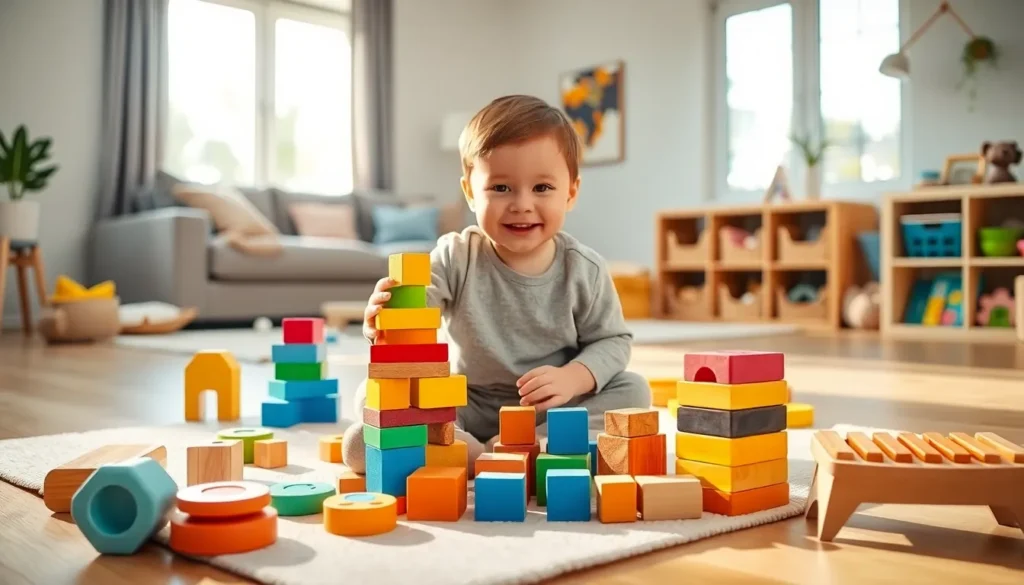
Create a safe environment for exploration. Toddlers learn through doing. Childproof the home so they can explore without constant “no’s.” Provide open-ended toys like blocks, balls, and art supplies.
Establish predictable routines. Toddlers thrive on consistency. Regular sleep schedules, mealtimes, and daily rhythms reduce anxiety and behavioral problems. Toddlers need 11-14 hours of sleep per day, including naps.
Read together daily. Reading builds vocabulary, attention span, and the parent-child bond. Toddlers benefit from board books, repetitive texts, and interactive books with flaps or textures.
Allow for struggle. Resist the urge to do everything for toddlers. Let them attempt zippers, stack blocks that fall, and problem-solve. Productive struggle builds confidence and skills.
Model emotional regulation. Toddlers learn by watching. When parents manage frustration calmly, toddlers absorb these patterns. Narrate emotions: “I feel frustrated that the jar won’t open. I’m going to take a breath.”
Stay connected during discipline. Correction works best within a warm relationship. Prioritize connection, playing, laughing, cuddling, alongside boundary-setting.
Limit screen time. The American Academy of Pediatrics recommends avoiding screens for toddlers under 18 months (except video calls) and limiting to one hour daily for ages 2-3.