Table of Contents
ToggleToddlers tools offer young children a chance to build fine motor skills, confidence, and independence. From toy hammers to kid-safe screwdrivers, the right tools can turn playtime into a valuable learning experience. Parents often wonder which options work best for little hands, and how to keep the experience safe. This guide covers the best toddlers tools, explains why they matter for development, and shares practical tips for introducing them at home.
Key Takeaways
- Toddlers tools help build fine motor skills, hand-eye coordination, and confidence through hands-on play.
- The best tools for toddlers include lightweight hammers, plastic screwdrivers, toy wrenches, and child-sized gardening tools.
- Always supervise tool play and choose age-appropriate options with no sharp edges or small parts.
- Start with one or two simple toddlers tools, demonstrate how to use them, then let your child experiment freely.
- Praise effort over results to encourage persistence and a positive attitude toward learning.
- A dedicated play workbench helps keep tools organized and gives toddlers a safe, focused space for tool activities.
Why Toddlers Benefit From Using Real and Toy Tools
Toddlers tools do more than keep kids busy. They support healthy development in several key areas.
Fine Motor Skill Development
Gripping a hammer, turning a screwdriver, or using pliers helps toddlers strengthen the small muscles in their hands and fingers. These skills transfer directly to tasks like holding a pencil, buttoning a shirt, or using scissors. Studies show that hands-on play with tools improves dexterity and hand-eye coordination in children ages 1–3.
Building Confidence and Independence
When toddlers use tools, they feel capable and grown-up. Completing a simple task, like hammering a peg into a board, gives them a sense of accomplishment. This boosts self-esteem and encourages them to try new challenges.
Encouraging Problem-Solving
Tool play requires toddlers to think through cause and effect. If a screw won’t turn, they learn to adjust their grip or try a different angle. This kind of trial-and-error thinking lays the groundwork for later problem-solving skills.
Real Tools vs. Toy Tools
Some parents choose real tools sized for small hands, while others prefer toy versions. Both have value. Real toddlers tools (like child-sized gardening trowels or soft rubber mallets) teach authentic skills. Toy tools let children mimic adult behavior in a low-risk setting. A mix of both often works best.
Best Types of Tools for Toddlers
Not all tools suit little hands. The best toddlers tools are lightweight, easy to grip, and safe for young children.
Hammers
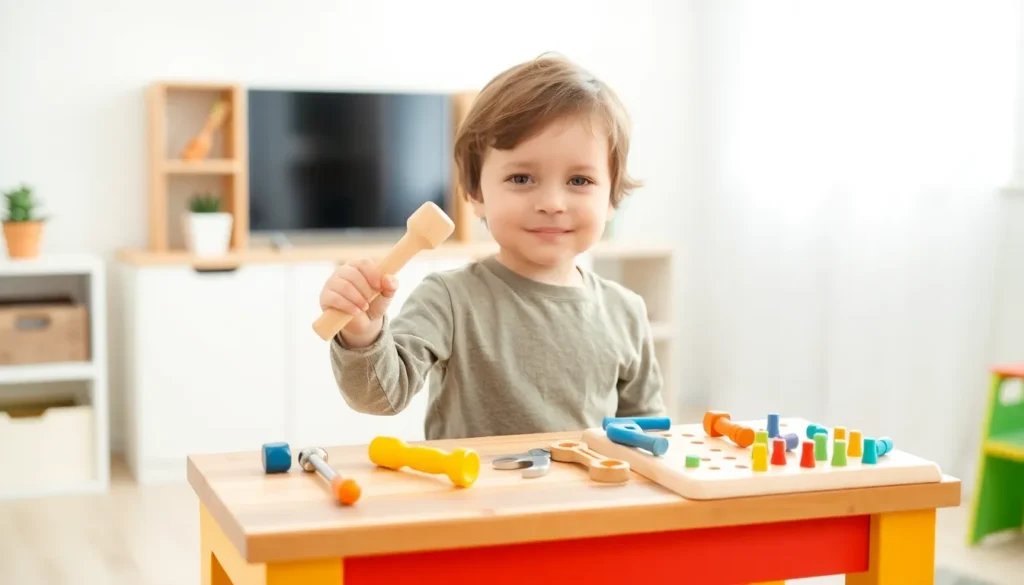
Wooden or rubber hammers top the list. They allow toddlers to practice pounding without risk of injury. Peg boards and hammer benches pair well with these tools and keep playtime focused.
Screwdrivers
Plastic or rounded-tip screwdrivers work well for toddlers. Look for sets that include large, chunky screws and boards with pre-drilled holes. These let kids practice the twisting motion without frustration.
Wrenches and Pliers
Toy wrenches and pliers with wide handles fit small hands comfortably. Many toy tool sets include these, and they help toddlers practice gripping and turning motions.
Gardening Tools
Child-sized rakes, shovels, and trowels let toddlers dig, scoop, and explore outdoors. Gardening with real toddlers tools connects kids to nature and teaches responsibility.
Workbenches
A play workbench gives toddlers a dedicated space for tool activities. Many workbenches come with built-in storage, a vise, and a variety of toy tools. They encourage imaginative play and help keep tools organized.
Tool Kits
Pre-made tool kits designed for toddlers bundle several items together. These often include a carrying case, which makes cleanup easier and teaches kids to care for their belongings.
Safety Tips for Tool Play
Safety matters most when toddlers use tools. A few simple steps can prevent accidents and keep playtime positive.
Supervise Every Session
Adults should watch toddlers closely during tool play. Even toy tools can cause bumps or pinched fingers if used carelessly. Stay within arm’s reach and offer guidance as needed.
Choose Age-Appropriate Options
Always check the recommended age on packaging. Toddlers tools should have no sharp edges, small parts, or choking hazards. Products rated for ages 18 months and up typically meet these standards.
Inspect Tools Regularly
Check tools for cracks, loose parts, or worn edges before each use. Damaged tools can break during play and create hazards. Replace any item that shows signs of wear.
Set Clear Boundaries
Teach toddlers basic tool rules: tools stay at the workbench, we don’t swing hammers near faces, and we put tools away when finished. Consistent boundaries help kids understand safe behavior.
Create a Safe Play Area
Designate a specific spot for tool play, indoors or out. Remove distractions and keep the space clear of clutter. A defined area helps toddlers focus and reduces the chance of accidents.
How to Introduce Tools to Your Toddler
Starting with toddlers tools can feel tricky. A thoughtful approach makes the process smoother for both parent and child.
Start Simple
Begin with one or two tools rather than a full set. A hammer and peg board or a screwdriver with large screws works well. Too many options at once can overwhelm a toddler.
Demonstrate First
Show your toddler how to use each tool. Move slowly and explain what you’re doing. Kids learn by watching, so clear demonstrations set them up for success.
Let Them Lead
Once your toddler grasps the basics, step back and let them experiment. Resist the urge to correct every mistake. Learning through trial and error builds resilience and creativity.
Make It Fun
Turn tool play into a game. Challenge your toddler to hammer all the pegs, or time how fast they can turn a screw. Playful challenges keep kids engaged and motivated.
Praise Effort, Not Just Results
Celebrate your toddler’s attempts, even when things don’t go perfectly. Saying “You worked so hard on that.” encourages persistence and a positive attitude toward learning.
Gradually Add More Tools
As your toddler gains skill and confidence, introduce new toddlers tools one at a time. This keeps the experience fresh and allows them to master each tool before moving on.