Table of Contents
ToggleWhat is a toddler? This question comes up often for new parents, caregivers, and anyone curious about early childhood. A toddler is a young child between the ages of one and three years old. This stage marks a dramatic shift from infancy, bringing rapid changes in movement, speech, and personality.
Toddlers are fascinating little humans. They’re learning to walk, talk, and assert their independence, often all at once. Understanding what defines a toddler helps parents set realistic expectations and provide the right support during these formative years. This article breaks down the toddler stage, covering age definitions, developmental milestones, common behaviors, and practical tips for caregivers.
Key Takeaways
- A toddler is a child between 1 and 3 years old, named for their characteristic wobbly “toddling” walk as they learn to move independently.
- Toddlers experience rapid developmental milestones, including walking, running, expanding vocabulary from a few words to 200+ words, and developing pretend play skills.
- Tantrums are a normal part of toddler behavior, peaking around age 2, because toddlers feel strong emotions but lack the language and self-control to express them.
- Support your toddler’s development by reading daily, offering simple choices, setting consistent limits, and narrating your day to build language skills.
- The toddler stage is sometimes called the “first adolescence” due to emotional swings, boundary-testing, and growing independence.
Age Range and Definition of Toddlerhood
The term “toddler” refers to children aged 12 months to 36 months, or one to three years old. The name comes from the way children in this age group move, they “toddle” with unsteady, wobbly steps as they master walking.
Some experts extend the toddler definition slightly. The American Academy of Pediatrics considers toddlers to be children between 1 and 2 years old, with ages 2 to 3 sometimes called “older toddlers” or the “preschool transition.” But, most parenting resources and pediatricians use the 1-to-3 age range.
What separates a toddler from an infant? Infants (birth to 12 months) are largely dependent on caregivers for everything. Toddlers, on the other hand, start moving independently, feeding themselves, and communicating with words. They’re no longer babies, but they’re not quite preschoolers either.
This toddler stage is sometimes called the “first adolescence.” Why? Because toddlers experience huge emotional swings, push boundaries, and test their newfound independence. It’s a critical period for brain development, social learning, and physical growth.
Key Developmental Milestones in Toddlers
Toddlers hit dozens of developmental milestones between ages one and three. These milestones fall into two main categories: physical development and cognitive/language development.
Physical Growth and Motor Skills
Physical changes in toddlers are dramatic. Most toddlers triple their birth weight by age one and continue growing steadily. Height increases by about 3 to 5 inches per year during toddlerhood.
Motor skill development happens fast. Here’s what most toddlers can do at different ages:
- 12-18 months: Walking independently, climbing stairs with help, stacking 2-3 blocks, holding a spoon
- 18-24 months: Running, kicking a ball, climbing furniture, scribbling with crayons
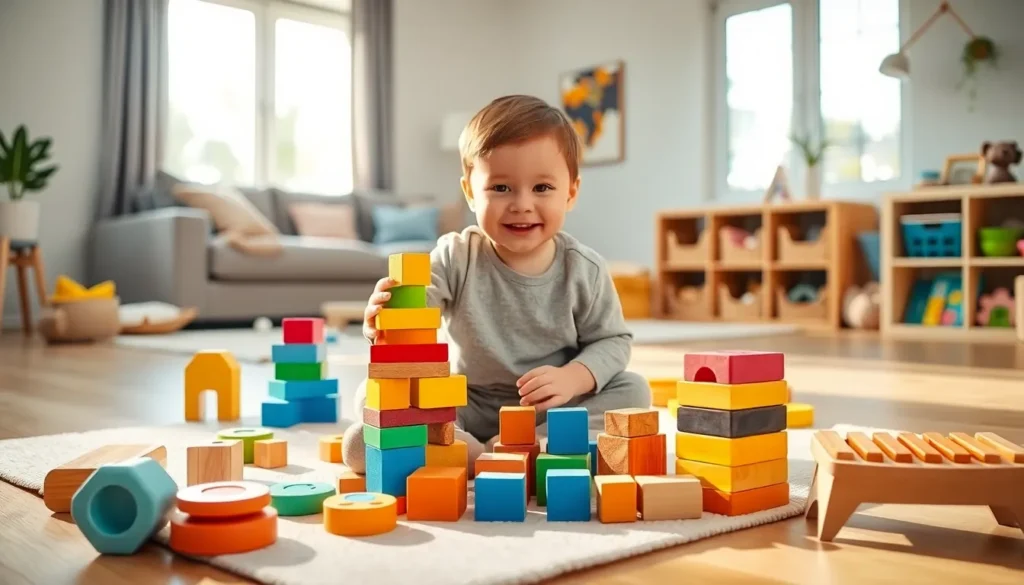
- 24-36 months: Jumping with both feet, pedaling a tricycle, building towers with 6+ blocks, turning book pages
Fine motor skills also improve. Toddlers learn to grip objects with their thumb and forefinger (pincer grasp), turn doorknobs, and eventually use zippers and buttons.
Language and Cognitive Development
Language development in toddlers follows a predictable pattern. At 12 months, most toddlers say 1-3 words. By age two, vocabulary expands to 50-100 words. By three, many toddlers speak in sentences of 3-4 words and know 200+ words.
Toddlers also develop cognitive skills rapidly:
- Object permanence: They understand that objects exist even when hidden
- Cause and effect: They learn that actions produce results (pushing a button makes a toy light up)
- Symbolic thinking: They use objects to represent other things (a block becomes a phone)
- Memory improvement: They remember routines, people, and places
Pretend play emerges during toddlerhood. A toddler might “feed” a stuffed animal or “cook” in a play kitchen. This type of play shows growing imagination and social understanding.
Common Behavioral Traits of Toddlers
Toddler behavior can be wonderful and challenging, often in the same hour. Understanding typical toddler behaviors helps caregivers respond calmly and effectively.
Tantrums are perhaps the most famous toddler trait. These emotional outbursts happen because toddlers feel strong emotions but lack the language and self-control to express them. A toddler might throw a tantrum because they can’t have a cookie, because their sock feels wrong, or because you cut their sandwich the “wrong” way. Tantrums peak around age 2 (hence the term “terrible twos”) and usually decrease by age 4.
The word “no” becomes a toddler favorite. Saying no is how toddlers assert independence and test limits. It’s frustrating for parents, but it’s actually a healthy sign of development.
Separation anxiety is common in younger toddlers. They may cry when parents leave the room or refuse to stay with unfamiliar caregivers. This usually improves as toddlers gain confidence and understand that parents return.
Parallel play describes how toddlers interact with peers. Instead of playing together, toddlers often play side by side with minimal interaction. Cooperative play develops later, around ages 3-4.
Other typical toddler behaviors include:
- Wanting to do everything themselves (“me do it.”)
- Difficulty sharing toys
- Short attention spans (2-5 minutes per activity)
- Strong preferences and routines
- Mood swings and quick emotional shifts
Tips for Supporting Your Toddler’s Development
Parents and caregivers play a huge role in toddler development. Here are practical ways to support healthy growth during this stage.
Create a safe environment. Toddlers are curious explorers with little sense of danger. Childproof your home by securing heavy furniture, covering outlets, and keeping small objects out of reach. A safe space lets toddlers explore freely.
Read together daily. Reading builds language skills, vocabulary, and attention span. Point to pictures, ask simple questions, and let your toddler turn pages. Even 10-15 minutes of reading each day makes a difference.
Offer choices. Giving toddlers simple choices (“Do you want the red cup or blue cup?”) reduces power struggles and builds decision-making skills. Keep options limited to two or three choices.
Set consistent limits. Toddlers need boundaries, even when they resist them. Be firm but kind. Use simple rules and repeat them often. Consistency helps toddlers feel secure.
Encourage physical activity. Toddlers need at least 60-90 minutes of active play each day. Outdoor play, dancing, climbing, and running all support motor development and burn energy.
Be patient with tantrums. Stay calm during meltdowns. Acknowledge feelings (“You’re upset because you wanted the toy”) and wait for the storm to pass. Don’t give in to demands made during tantrums, but don’t punish the emotions themselves.
Talk constantly. Narrate your day, describe what you’re doing, and name objects. This exposure to language directly builds your toddler’s vocabulary and comprehension.