Table of Contents
ToggleTop toddlers reach developmental milestones at their own pace, but certain patterns remain consistent across early childhood. Parents and caregivers often wonder what “normal” looks like during ages 1 to 3. This period brings rapid changes in physical abilities, language skills, and cognitive function. Understanding these milestones helps adults identify strengths and spot areas that may need extra attention. This guide breaks down key developmental stages, signs of healthy progress, and practical ways to support a toddler’s growth.
Key Takeaways
- Top toddlers develop at their own pace, but physical, language, and cognitive milestones follow consistent patterns between ages 1 and 3.
- By age 2, most toddlers expand their vocabulary to 50+ words and begin combining words into simple phrases.
- Signs of a thriving toddler include curiosity, affection toward caregivers, age-appropriate coordination, and 11-14 hours of sleep daily.
- Parents can support toddler growth by talking constantly, reading aloud, encouraging physical activity, and establishing predictable routines.
- Red flags like no words or walking by 18 months or loss of skills should be discussed with a pediatrician.
- Open-ended toys like blocks, art supplies, and pretend play items spark creativity and support multiple areas of development.
Key Developmental Stages for Toddlers Ages 1 to 3
Toddlers ages 1 to 3 experience dramatic growth across multiple areas. Each stage builds on the previous one, creating a foundation for future learning. Top toddlers show progress in physical coordination, language acquisition, and problem-solving abilities during this window.
Physical and Motor Skill Growth
Physical development accelerates quickly between ages 1 and 3. At 12 months, most toddlers pull themselves up to stand and take their first wobbly steps. By 18 months, walking becomes steadier, and many children start running, though with frequent tumbles.
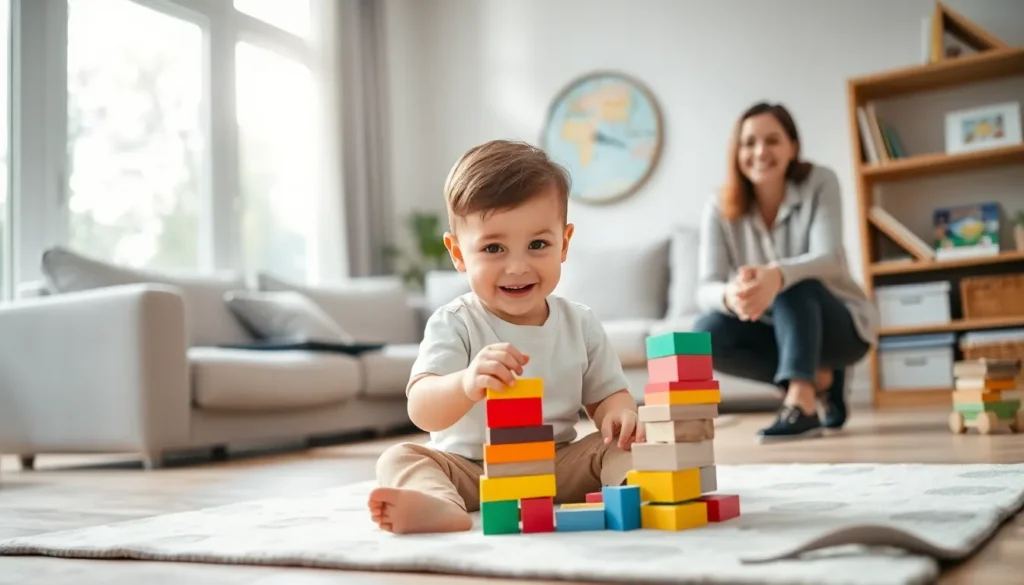
Fine motor skills also improve during this period. A 1-year-old grabs objects with a full fist. By age 2, that same child uses a pincer grasp to pick up small items like cereal pieces. This progression allows toddlers to feed themselves, stack blocks, and eventually hold crayons.
Top toddlers typically achieve these physical milestones:
- 12-15 months: Walking with support, crawling up stairs
- 18-24 months: Running, kicking balls, climbing furniture
- 24-36 months: Jumping with both feet, pedaling tricycles, throwing overhand
Gross motor activities like climbing and running strengthen large muscle groups. Fine motor practice, such as playing with playdough or turning pages, builds hand strength and coordination. Both types contribute to a toddler’s overall physical development.
Language and Cognitive Development
Language growth during toddlerhood is remarkable. Most 1-year-olds say 1 to 3 words. By age 2, vocabulary expands to 50 words or more. Three-year-olds often speak in complete sentences and ask endless questions.
Top toddlers show cognitive development through play and problem-solving. They begin to understand cause and effect, pressing a button makes a toy light up. Object permanence, the knowledge that things exist even when hidden, solidifies around 12 months.
Typical language milestones include:
- 12 months: Babbling with expression, saying “mama” or “dada”
- 18 months: Using 10-20 words, following simple instructions
- 24 months: Combining two words (“want milk”), pointing to body parts
- 36 months: Speaking in 3-4 word sentences, answering “what” and “where” questions
Cognitive skills develop alongside language. Toddlers learn to sort shapes, complete simple puzzles, and engage in pretend play. A 2-year-old might “feed” a stuffed animal. A 3-year-old creates elaborate imaginary scenarios with toy figures. These activities show growing imagination and mental flexibility.
Signs of a Thriving Toddler
How do parents know their toddler is developing well? Certain signs indicate healthy progress across physical, emotional, and social domains.
Top toddlers demonstrate curiosity about their environment. They explore drawers, investigate new toys, and show interest in other children. This natural curiosity drives learning and indicates healthy cognitive function.
Emotional development shows in how toddlers express and manage feelings. A thriving toddler:
- Shows affection to familiar people
- Experiences a range of emotions (joy, frustration, fear)
- Seeks comfort from caregivers when upset
- Begins showing empathy around age 2-3
Social development progresses from parallel play (playing beside other children) to interactive play. By age 3, many toddlers engage in cooperative activities and take turns, at least some of the time.
Physical signs of a thriving toddler include steady growth, good appetite, and age-appropriate coordination. Top toddlers sleep 11-14 hours per day, including naps. They have energy for active play and recover quickly from minor illnesses.
Red flags that may warrant discussion with a pediatrician include:
- No words by 18 months
- Not walking by 18 months
- Loss of previously acquired skills
- No interest in other children by age 3
- Limited eye contact or response to name
Every child develops differently. Some top toddlers excel in language but reach physical milestones later. Others run before they talk. Variation is normal. Consistent delays across multiple areas, but, deserve professional evaluation.
How to Support Your Toddler’s Growth
Parents and caregivers play a direct role in toddler development. Simple daily practices create opportunities for learning and growth.
Talk constantly. Narrate activities throughout the day: “Now we’re putting on your blue shirt.” Name objects, describe actions, and ask questions. This language exposure builds vocabulary. Top toddlers hear thousands of words daily from engaged caregivers.
Read together. Reading aloud introduces new words, concepts, and story structures. Board books work well for younger toddlers. By age 2-3, children enjoy longer picture books and often request favorites repeatedly. Let them turn pages and point to pictures.
Encourage physical activity. Toddlers need opportunities to run, climb, and explore. Parks, backyards, and indoor play spaces all work. Limit screen time, the American Academy of Pediatrics recommends no more than one hour daily for children ages 2-5.
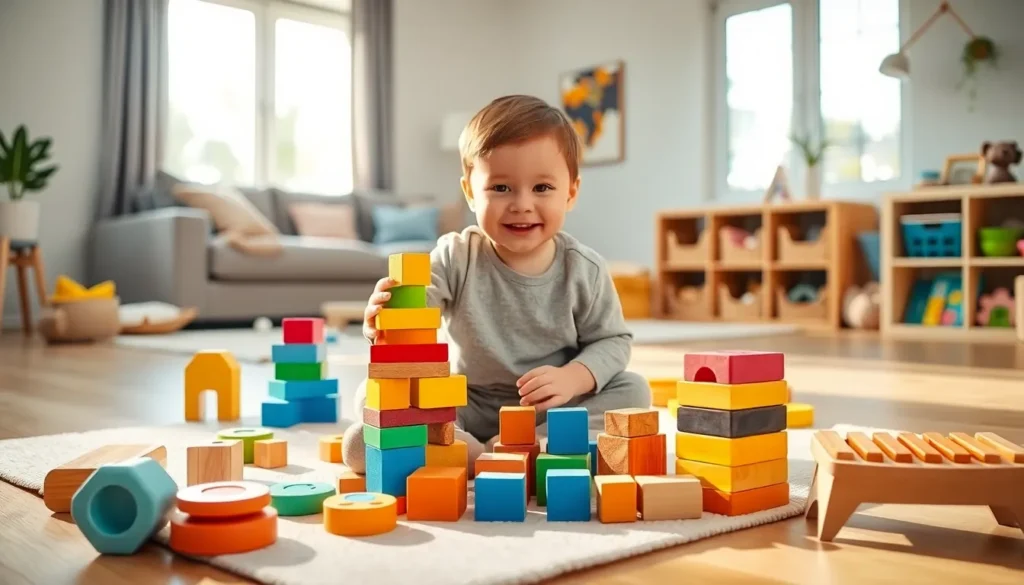
Provide open-ended toys. Blocks, balls, art supplies, and pretend play items spark creativity. These toys grow with children and support multiple developmental areas. A cardboard box becomes a car, a house, or a spaceship.
Establish routines. Predictable schedules help toddlers feel secure. Regular mealtimes, nap times, and bedtime routines reduce anxiety and support healthy sleep patterns. Top toddlers thrive with consistency.
Allow independence. Toddlers want to do things themselves. Let them try, even when it’s messy or slow. Self-feeding, choosing clothes, and helping with simple chores build confidence and fine motor skills.
Respond to emotions. Validate feelings while setting limits on behavior. “You’re mad because you wanted that toy. It’s not okay to hit.” This approach teaches emotional vocabulary and self-regulation.
Schedule regular checkups. Pediatricians track developmental progress and catch potential issues early. They screen for hearing, vision, and developmental delays at standard intervals.