Table of Contents
ToggleEvery creative project starts with the right arts & crafts tools. Whether someone is cutting fabric for a handmade quilt or sketching designs for a new painting, the tools they use determine the quality of their work. Beginners and experienced crafters alike need reliable equipment to bring their ideas to life.
This guide covers the essential arts & crafts tools every creator should have in their workspace. From basic cutting instruments to specialty items for advanced projects, readers will discover what belongs in a well-stocked craft kit. The right tools don’t just make projects easier, they make them possible.
Key Takeaways
- Quality arts & crafts tools directly impact the outcome of creative projects, making them essential for beginners and experienced crafters alike.
- Keep separate scissors for fabric and paper to maintain blade sharpness and protect your investment.
- A complete craft kit should include multiple adhesive types—white glue, hot glue, double-sided tape, and specialty adhesives—to handle different materials.
- Mid-range drawing and painting instruments often deliver the best value, as cheap brushes shed bristles and low-grade pencils break easily.
- Specialty arts & crafts tools like die-cutting machines, embossing equipment, and jewelry pliers expand creative possibilities but require practice to master.
- Proper organization and regular maintenance—including sharpening blades and cleaning brushes—extends the life of your tools and improves crafting efficiency.
Basic Cutting and Measuring Tools
Cutting and measuring tools form the foundation of any arts & crafts toolkit. Without precise cuts and accurate measurements, even simple projects can go wrong.
Scissors remain the most versatile cutting tool. Crafters should own at least two pairs: one for fabric and one for paper. Using fabric scissors on paper dulls the blades quickly, so keeping them separate protects the investment.
Craft knives handle detailed cutting work that scissors can’t manage. X-Acto knives and rotary cutters give clean edges on cardstock, foam board, and thin materials. A self-healing cutting mat underneath protects work surfaces and extends blade life.
Rulers and measuring tapes ensure accuracy. A clear acrylic ruler works well for paper crafts because users can see through it while marking. For fabric projects, a flexible measuring tape follows curves and contours.
T-squares and quilting rulers help crafters achieve perfectly straight lines and consistent angles. These arts & crafts tools save time on repetitive measurements and reduce errors in larger projects.
Investing in quality cutting and measuring tools pays off immediately. Cheap scissors frustrate users and produce ragged edges. Good tools feel comfortable in the hand and deliver clean results every time.
Adhesives and Fastening Supplies
Adhesives hold creative projects together, literally. Different materials require different bonding solutions, so a complete craft kit includes several options.
White craft glue works for paper, cardboard, and light materials. It dries clear and cleans up easily with water. This affordable staple belongs in every crafter’s supply cabinet.
Hot glue guns bond heavier materials quickly. They work on wood, fabric, plastic, and mixed media projects. Low-temperature models suit delicate materials like foam and ribbon, while high-temperature versions create stronger bonds on hard surfaces.
Double-sided tape provides instant adhesion without drying time. Scrapbookers and card makers rely on it for quick assembly. Foam mounting tape adds dimension to layered projects.
Spray adhesive covers large surface areas evenly. It works especially well for mounting photos, attaching fabric to boards, and collage work. Users should apply it in well-ventilated spaces.
Specialty adhesives like fabric glue, wood glue, and epoxy handle specific materials. E6000 and similar industrial-strength options bond metal, glass, and ceramics permanently.
Arts & crafts tools for fastening also include non-adhesive options. Brad fasteners, eyelets, and staples add visual interest while holding layers together. A basic eyelet setter and a good stapler expand creative possibilities without adding much cost.
Drawing and Painting Instruments
Drawing and painting instruments let creators add color, detail, and expression to their work. The right selection depends on preferred mediums and project types.
Pencils range from basic graphite to specialized options. A set of drawing pencils in various hardnesses (2H through 6B) covers sketching needs. Colored pencils come in wax-based and oil-based varieties, each with distinct blending properties.
Brushes matter as much as the paint itself. Natural bristle brushes work best with oil paints, while synthetic brushes suit acrylics and watercolors. A starter set should include flat, round, and detail brushes in multiple sizes.
Markers serve different purposes based on their ink type. Permanent markers write on almost any surface. Alcohol-based markers blend smoothly for illustration work. Water-based markers are safer for children and easier to clean.
Pens for arts & crafts tools include fine liners, gel pens, and calligraphy pens. Fine liners create precise outlines and detailed patterns. Gel pens add metallic and opaque colors to dark surfaces.
Palettes and water containers support painting work. A palette with wells keeps colors separated, while a stay-wet palette prevents acrylics from drying out during long sessions.
Quality matters with drawing and painting instruments. Cheap brushes shed bristles into wet paint. Low-grade colored pencils break easily and don’t layer well. Mid-range arts & crafts tools often deliver the best value for hobbyists.
Specialty Tools for Advanced Crafting
Advanced crafters often need specialty arts & crafts tools for specific techniques. These items expand creative options beyond basic supplies.
Die-cutting machines like the Cricut and Silhouette cut precise shapes from paper, vinyl, and fabric. They connect to computers and follow digital designs, making complex cuts easy and repeatable.
Embossing tools add raised textures to paper and cardstock. Heat embossing requires embossing powder, a heat gun, and embossing ink. Dry embossing uses stencils and a stylus to create impressions without heat.
Punches and stamps create decorative elements quickly. Border punches add lacy edges to paper. Rubber stamps and acrylic stamps transfer images using ink pads in countless colors.
Sewing and textile tools include rotary cutters, seam rippers, and needle threaders. Crafters working with fabric also need straight pins, pin cushions, and quality shears.
Jewelry-making supplies encompass pliers, wire cutters, and bead organizers. Round-nose pliers shape wire loops. Flat-nose pliers grip and bend. Flush cutters leave clean wire ends.
Woodburning pens and resin-mixing supplies represent growing craft categories. Both require safety precautions but open up unique creative directions.
Specialty arts & crafts tools often require practice to master. Beginners should start with one new technique at a time rather than buying everything at once.
Organizing and Maintaining Your Tool Collection
A well-organized workspace makes crafting more enjoyable and efficient. Proper storage also protects arts & crafts tools from damage.
Clear storage containers let crafters see contents at a glance. Stackable bins maximize vertical space. Drawer organizers separate small items like buttons, beads, and paper clips.
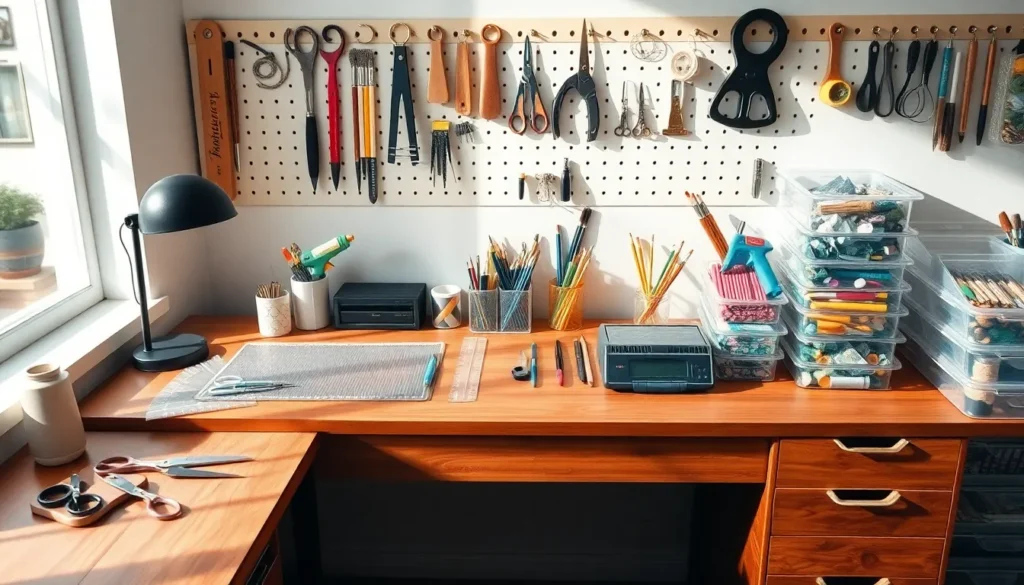
Pegboards and wall-mounted systems keep frequently used tools within reach. Scissors, tape dispensers, and rulers hang neatly where crafters can grab them quickly.
Rolling carts provide flexible storage that moves where needed. Many crafters position carts beside their main work table and wheel them away when not in use.
Tool maintenance extends the life of arts & crafts tools significantly. Scissors and craft knives need occasional sharpening. Brushes require proper cleaning after each use, acrylic left to dry in bristles ruins brushes permanently.
Blade replacement keeps cutting tools performing well. Dull blades force users to press harder, causing hand strain and imprecise cuts. Fresh blades slice cleanly with minimal effort.
Climate control matters for certain supplies. Adhesives and paints can dry out or separate in extreme temperatures. Storing them in a cool, dry location prevents waste.
Creators should inventory their arts & crafts tools periodically. Knowing what they own prevents duplicate purchases and highlights gaps in their collection.