Table of Contents
ToggleTop reading and literacy development strategies help children and adults build skills that last a lifetime. Strong readers perform better in school, earn higher wages, and engage more fully with the world around them. Yet many families struggle to find practical approaches that actually work.
This guide breaks down the essential components of reading development, from early phonics to advanced comprehension. Whether someone is teaching a toddler their first letters or helping a teenager who’s fallen behind, these evidence-based methods deliver results. The strategies ahead apply to learners at every stage, because it’s never too early or too late to become a better reader.
Key Takeaways
- Children who develop strong literacy skills before kindergarten are far more likely to read at grade level by third grade and avoid dropping out of high school.
- Top reading and literacy development combines phonemic awareness, phonics, vocabulary, and comprehension—each skill builds on the others.
- Reading aloud for just 15 minutes daily is one of the most effective habits for boosting literacy at any age.
- Follow a child’s interests to build reading habits—comic books, graphic novels, and nonfiction on favorite topics all count.
- About 10-15% of students have dyslexia or reading difficulties, and early intervention with structured literacy programs dramatically improves outcomes.
- Consistency beats intensity—simple daily habits like discussing books and pointing out signs build lasting reading skills.
Why Early Literacy Skills Matter
Children who develop strong literacy skills before kindergarten have a significant advantage. Research from the National Institute for Literacy shows that kids who can recognize letters and sounds by age five are far more likely to read at grade level by third grade. That third-grade benchmark matters, students who can’t read proficiently by then are four times more likely to drop out of high school.
Early literacy development shapes brain architecture. Between birth and age five, a child’s brain forms over one million neural connections every second. Reading aloud, singing songs, and playing word games during this window strengthens the pathways responsible for language processing.
The benefits extend beyond academics. Strong readers show better emotional regulation, improved problem-solving abilities, and higher self-confidence. They’re also more likely to read for pleasure as adults, creating a positive cycle that lasts generations.
Parents don’t need expensive programs or special training. Simple daily habits, pointing out street signs, discussing picture books, or making up silly rhymes, build the foundation for top reading and literacy development. Consistency beats intensity every time.
Key Components of Reading Development
Reading isn’t a single skill. It’s a collection of abilities that work together. Understanding these components helps parents and educators target specific weaknesses and celebrate genuine progress.
Phonemic Awareness and Phonics
Phonemic awareness is the ability to hear and manipulate individual sounds in spoken words. A child with strong phonemic awareness can tell you that “cat” has three sounds: /k/, /a/, and /t/. They can also blend those sounds together or swap them out to make new words.
Phonics builds on this foundation by connecting sounds to written letters. When a child sees the letter “m” and says /m/, that’s phonics in action. Systematic phonics instruction, teaching letter-sound relationships in a planned sequence, produces better reading outcomes than random or incidental approaches.
Effective phonics activities include:
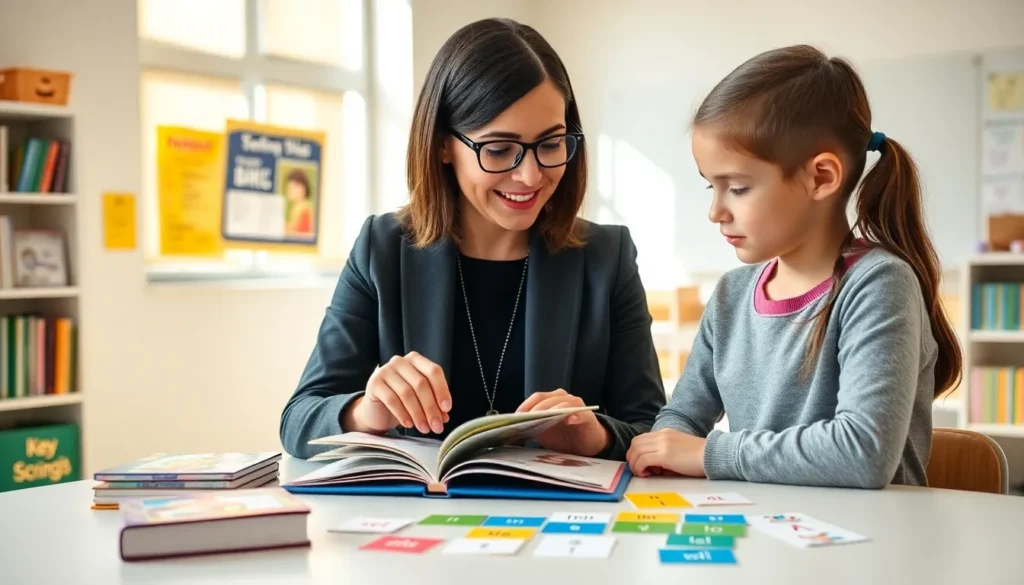
- Sorting picture cards by beginning sounds
- Building words with magnetic letters
- Playing “I Spy” games focused on letter sounds
- Reading decodable books that match current skill levels
Most children benefit from explicit phonics instruction through second grade. Some need it longer, and that’s perfectly normal.
Vocabulary and Comprehension
Knowing letter sounds means nothing if a reader can’t understand what the words mean. Vocabulary development starts with everyday conversation. Children from language-rich homes hear approximately 30 million more words by age four than children from less verbal environments.
Comprehension goes deeper than vocabulary. It requires readers to make predictions, ask questions, visualize scenes, and connect new information to what they already know. Strong comprehenders don’t just decode words, they actively construct meaning.
Strategies that boost vocabulary and comprehension include:
- Reading widely across genres and topics
- Discussing books before, during, and after reading
- Encouraging children to retell stories in their own words
- Introducing new words in context rather than isolation
Top reading and literacy development programs address both decoding and meaning-making. One without the other leaves readers stuck.
Effective Methods to Improve Literacy at Home
Schools play a crucial role, but home environment often determines reading success. Fortunately, families can make a real impact without turning their living room into a classroom.
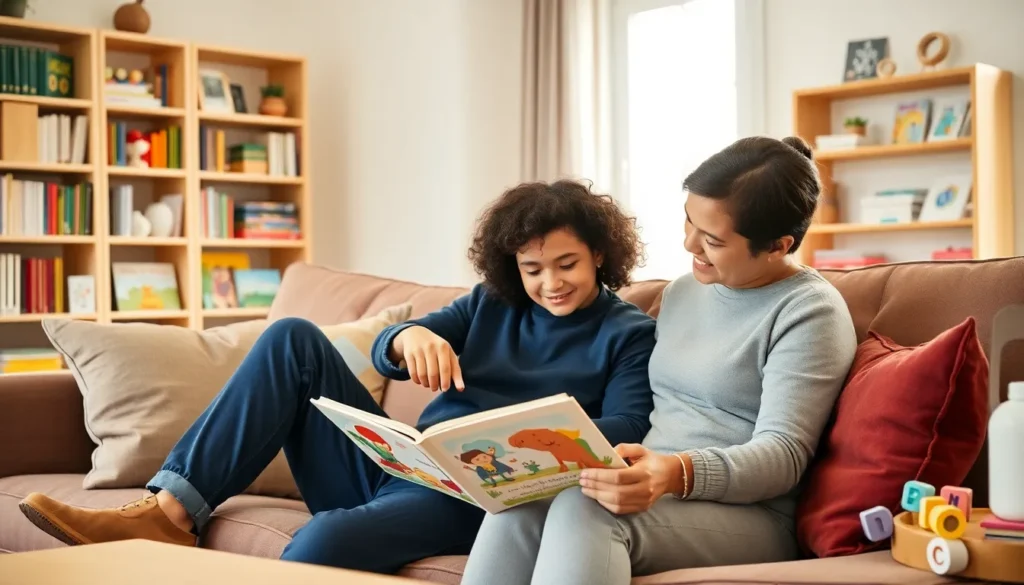
Read aloud every day. This single habit does more for literacy development than almost anything else. Even fifteen minutes of shared reading exposes children to new vocabulary, sentence structures, and ideas. Don’t stop when kids can read independently, reading aloud together benefits learners of all ages.
Create a print-rich environment. Books should be accessible and visible. Labels on household items, grocery lists on the refrigerator, and magazines on the coffee table all signal that reading matters. Let children see adults reading for pleasure, not just on screens.
Make it interactive. Ask open-ended questions during story time. “What do you think will happen next?” “Why did the character make that choice?” “How would you feel in that situation?” These conversations build critical thinking alongside literacy skills.
Follow their interests. A reluctant reader who loves dinosaurs might devour books about paleontology. Comic books, graphic novels, and even video game guides count as reading. The goal is building the habit first.
Use technology wisely. Quality reading apps and audiobooks can supplement physical books. But, passive screen time doesn’t build literacy the way interactive reading does. Choose apps that require active participation rather than just watching.
Establish routines. Bedtime stories work because they’re predictable. Children thrive on routine, and a consistent reading time each day builds habits that stick.
Supporting Struggling Readers
Some children need extra help. About 10-15% of students have dyslexia or another reading difficulty. Others simply need more time and practice. Early intervention makes a dramatic difference in outcomes.
Warning signs vary by age. Preschoolers might struggle to rhyme or learn nursery songs. Elementary students may read slowly, guess at words, or avoid reading altogether. Older students often develop clever workarounds that mask their difficulties.
If a child is struggling, parents should:
- Request an evaluation. Schools must assess students suspected of having learning disabilities. Private evaluations are also available. A proper diagnosis opens doors to appropriate support.
- Seek structured literacy instruction. Programs based on Orton-Gillingham principles use explicit, systematic, multisensory methods. These approaches work for struggling readers whether or not they have a formal diagnosis.
- Focus on effort, not outcomes. Praising hard work rather than intelligence builds resilience. Struggling readers need to know that difficulty doesn’t mean failure.
- Provide audiobooks and text-to-speech tools. These accommodations allow struggling readers to access grade-level content while they build decoding skills. Listening to books still builds vocabulary and comprehension.
- Be patient. Progress may be slow but steady. Comparing a struggling reader to peers does more harm than good. Celebrate individual growth.
Top reading and literacy development support looks different for every learner. What matters is meeting children where they are and moving forward from there.